
Two companies publish the same number of posts in a year. One ends up with an asset that books calls in month twenty. The other ends up with an archive nobody visits. The work looked identical while it was being produced.
The difference isn't budget or headcount. It comes down to decisions made at the brief stage, before a single sentence gets written.
Most content is written to be finished
Publishing calendars reward completion. A post goes out, the slot is filled, the week is done. Nothing in that process asks whether the piece will still earn attention in six months, so most pieces don't.
Content that keeps paying has a job beyond filling a slot. It answers a question your buyers ask on the way to a purchase decision, it answers that question better than anything else available, and it stays accurate long enough to accumulate links and rankings.
Write for the questions that stay asked
Search demand splits into two kinds. Some questions spike and disappear: product launches, news reactions, conference recaps. Others get asked at steady volume every month by every new buyer entering your category.
Steady questions are where compounding lives. "How do you evaluate a SOC 2 vendor" gets asked in perpetuity. A reaction post about last week's funding round gets three days of traffic and then costs you maintenance.
Both have a place. Teams that only publish the first kind build an audience and no library. Publishing only the second builds a library nobody discovers. Most B2B programs work best at roughly three durable pieces for every timely one.
Depth is the moat
The gap between a 900-word overview and a 2,500-word piece with real operating detail is not effort for its own sake. Anyone can produce the overview in a few minutes now, which is exactly why the overview stopped ranking and stopped getting shared.
What survives is specificity: the actual decision criteria, the numbers from real engagements, the objection your buyer raises in week three that nobody writes about. Specificity is hard to copy because it comes from doing the work, and it's what makes a piece worth linking to.
Distribution is part of the job
A post with no distribution plan is a bet on search alone, and search takes months to arrive. Every durable piece should ship with a plan for its first ninety days: a LinkedIn version in your founder's voice, an email to the list, a section repurposed into an outbound sequence, an internal note so sales knows when to send it.
The same asset earns several times more when it gets put in front of people instead of left to be found.
Measure the right lag
Content programs get killed at month four because someone checks traffic and sees a flat line. Traffic is a lagging indicator of a lagging indicator.
Track leading signals instead: which pieces sales actually sends, which pages show up in the path before a demo request, which terms you now rank on page two for. Page two in month four becomes page one in month nine, and page one is where the compounding shows up in pipeline.
The decision happens before the writing
Whether a piece is still working a year from now gets settled at the brief, not the draft. Pick questions with durable demand, commit to enough depth that the piece is hard to replicate, plan distribution before publication, and hold the program long enough for search to respond.
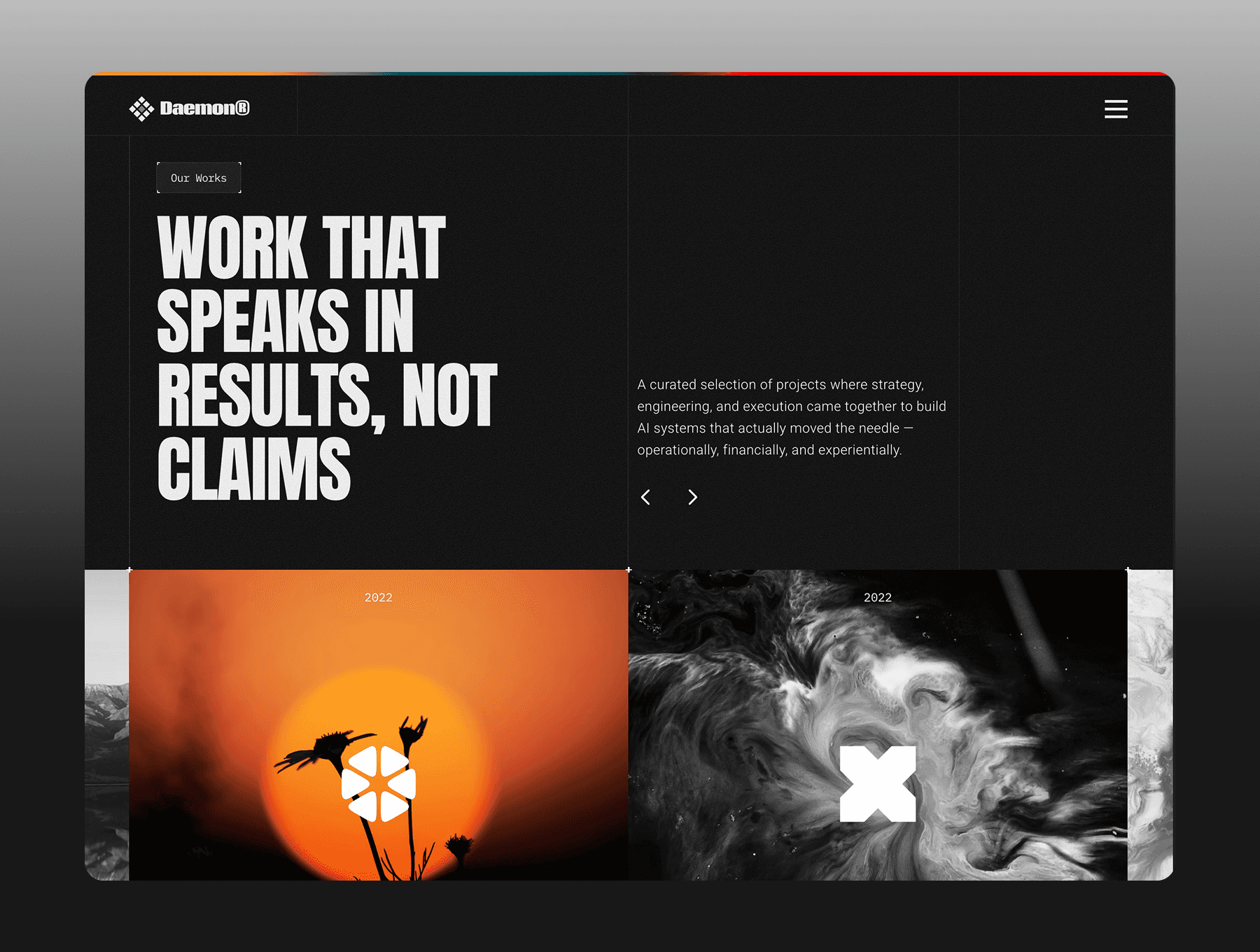
Our Works
MORE Articles
A curated selection of projects where strategy, engineering, and execution came together to build AI systems that actually moved the needle — operationally, financially, and experientially.

Buy Daemon AI Template
from
$129